



It used to be in Texas that if you had a DWI that was beyond ten years old, that conviction could not be used against you in your current case to ratchet up the punishment.
But years ago, Texas changed that law so if you had an older DWI conviction whether it was ten, twenty–even thirty years ago, it can be used to make the punishment for your present DWI conviction much more harsh.
It can even change the grade of your current DWI offense to which you are presently being prosecuted.
You may have multiple DWI convictions because you may just be unlucky. After all, with increased efforts by law enforcement to deter drunk driving, it really doesn’t take much to get arrested.
As a criminal defense lawyer in Houston who is also a DWI Specialist by the National College for DUI Defense, I understand this all too clearly.
But if you have an issue with alcoholism, then we need to help you address that.
If we don’t first address your drinking problem, then you are more likely to come back with another DWI.
And neither we (as a community) nor the courts want that because we all drive the same streets you do.
So, as a responsible citizen and a law firm that cares about our clients welfare, we try to get our clients the help they need to address all the issues we can that caused their DWI arrests and help both legally and become a better member of our community.
Form Submissions have a fast response time. Request your free consultation to discuss your case with one of our attorneys over the phone. The use of this form does not establish an attorney-client relationship.
The information on this website is for general information purposes only. Nothing on this site should be taken as legal advice for any individual case or situation. This information is not intended to create, and receipt or viewing does not constitute, an attorney-client relationship.

Texas law says, you cannot drive while you’re impaired from alcohol and it says that you cannot drive with an open container.
A DWI lawyer will tell you that if you are caught with an open container, the character of your offense will be changed and jail time will automatically be added to the minimum of the sentence you receive.
If you are stopped, an officer is going to smell the open container, which will continue to have an odor, and he or she will assume you are drinking and driving.
So don’t drive with an open container — even one that’s empty! Don’t take any chances — if you have an empty container in your vehicle, just throw it away in the trash (and definitely not out of your car window).
Form Submissions have a fast response time. Request your free consultation to discuss your case with one of our attorneys over the phone. The use of this form does not establish an attorney-client relationship.

The information on this website is for general information purposes only. Nothing on this site should be taken as legal advice for any individual case or situation. This information is not intended to create, and receipt or viewing does not constitute, an attorney-client relationship.
The heavy deluge continued another two days which prevented most of the vintage warbird fleet from leaving.
Indeed, the rains and resultant flooding were so bad that local animals started to line up 2 by 2 and I started looking for a guy named Noah.
On Wednesday morning the rain finally stopped, the clouds became scattered, and the wind became clam.
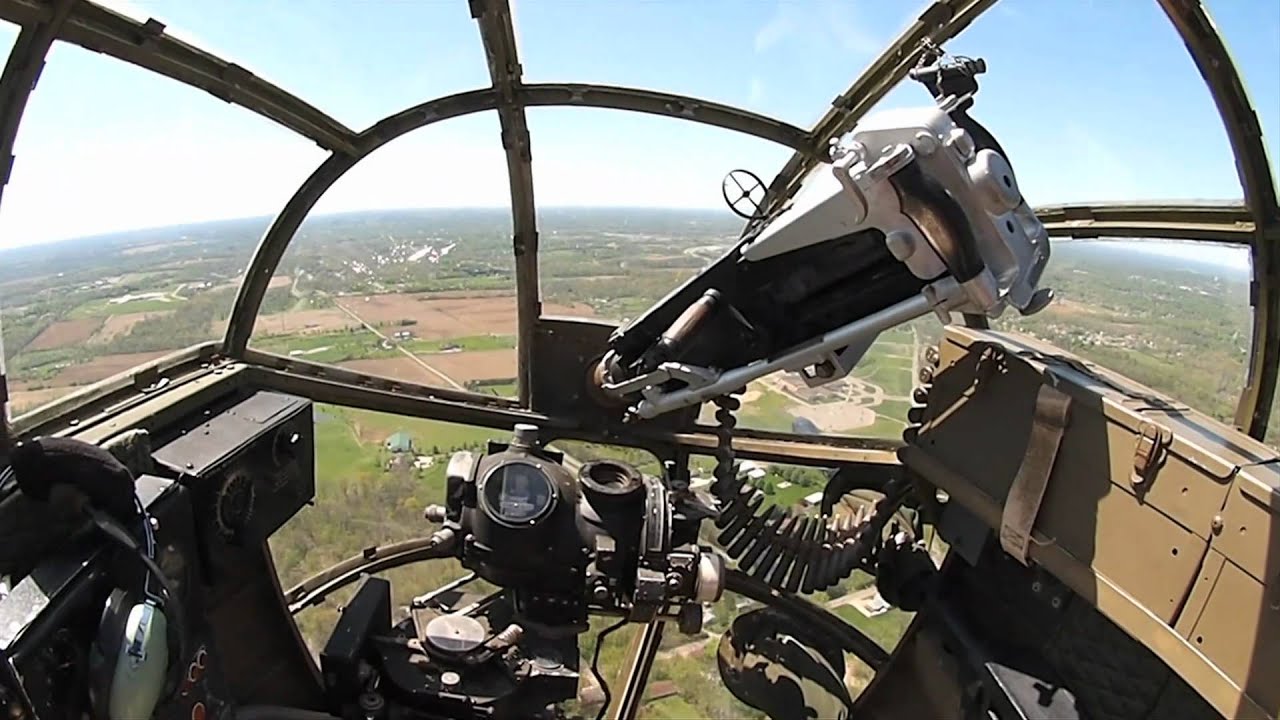
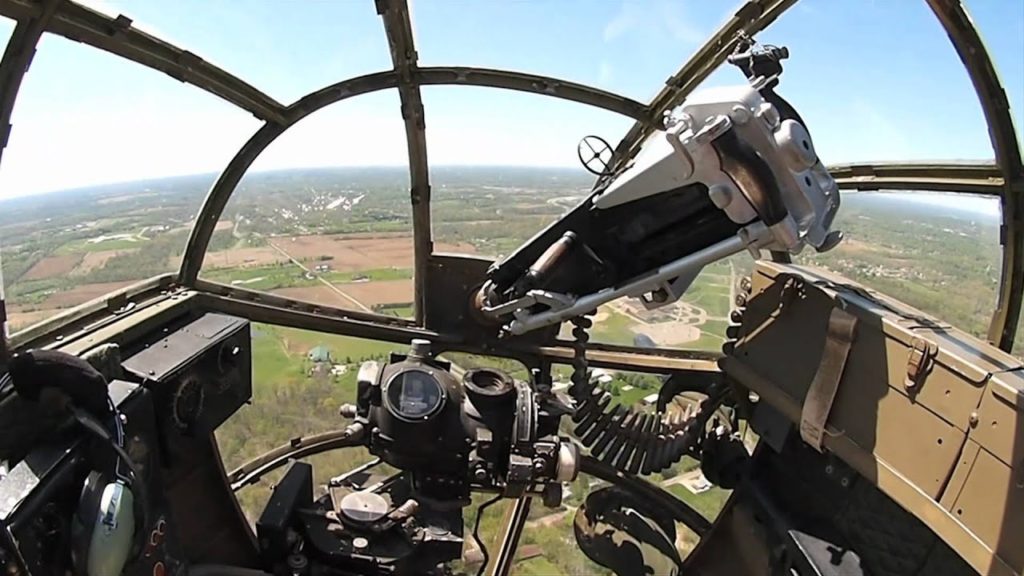
It was at that time that I, along with our North American WWII PBJ crew made plans to fly our blue U.S. Marine gun nosed version of the Mitchell B-25 back to its home at Houston’s Hobby Airport (KHOU).
Our plane was owned by a local air museum and we were its caretakers, protectors, financiers, and crew.
We all loved our bird and treated her with great respect and love.
Today I was to act as co-pilot, Billy was our pilot, and Mark was our flight engineer.
Our preflight inspection was completed and nothing was found amiss.
Because of the rains and the fact that our bird was forced to weather them unprotected while parked on the ramp, we performed our preflight and engine run up with extra care.
Particular attention was given to draining the fuel tanks to be sure that there was no water contamination that might cause a loss of power or the loss of an engine.
No water was found.
The two Wright R-2600s started without problem and our magneto and manifold power checks were within tolerance.
The taxi to the runway was also uneventful.
Our crew safety procedures included watching the exhaust stacks for excessive or off colored smoke as well as to listen to the sounds of our motors on start up, run up and during taxi to verify that all was well before taking the runway.
Again, nothing appeared or sounded amiss.
As the co-pilot, as part of our crew coordination procedures, I was charged with the responsibility of working the radios.
I asked for and received our tower to tower special clearance and our squawk.
We were then immediately cleared for take off on runway 35 with a follow up an instruction to turn to a westerly heading of 220° after departure.
Hobby, our destination airport, is the second largest airport in Houston and is west/northwest of Ellington by only six miles.
It has four sets of runways 30L/12R, 30R/12L, 35/17 and 4/22. The airport is always busy with commercial and private traffic.
Today, for traffic flow purposes, air traffic controllers were directing Hobby traffic from the east and southeast to fly southwest of the airport and then north for a right base to the parallel 12 runways.
Once on Ellington Field’s runway 35, Billy advanced the throttles to take off power and we began our roll.
Engine temps, pressures, sights and sounds all looked and sounded normal until the gear was in transit and we were out of runway.
It was at that time that the right engine began to loose power, started cutting out, and began puffing white smoke.
Both Billy and I reminded each other that above all we would first and foremost fly the airplane.
As I raised the flaps, I then started to troubleshoot the problem as the old bomber struggled and clawed at the sky to gain altitude.
The Mitchell weighs over 25,000 lbs. and its controls are mushy at slow speed.
Moreover, although very capable of single engine flight, it must be flown with care to avoid loss of VMC.
Neither Billy nor I identified the problem as we leveled at 1000’, the minimum pattern altitude for Hobby.
Geographically, we were now at the midway point between Hobby and Ellington with the difference being we had to do a 180° turn to go back to KEFD, but only a 90° left turn to go to KHOU – we elected to head to Hobby as it gave us a straight in approach for R22.
It was here that Ellington tower acknowledged radar contact and instructed us to then contact Hobby tower.
I acknowledged the changeover and immediately contacted Hobby tower and informed the controller there of our poor performing engine and asked for a straight in landing clearance to runway 22.
To my surprise the controller directed us to fly south of the field in a westerly direction to join the flow for the runway 12 parallels.
Having heard the controller’s instructions, Billy flew a course that placed us in a left up wind for runway 22 at the numbers.
Pinching myself in disbelief, I again explained to the controller that our miss-firing engine was a very real concern to us and that getting our bird safely on ground seemed like a good idea to us, just as it would to any sane and reasonable person.
The controller again gave us the same instructions as before and added, “what are your intentions?”
I felt stupid at that time for not being more assertive because we missed the opportunity for a straight in safe and uneventful approach to 22.
Remembering the old Chinese proverb of “fool me once, shame on you!
Fool me twice, shame on me!”, neither Billy nor I wanted to pass up the next closest way to a safe landing.
Hearing the controller’s last question loud and clear, I responded “We are declaring an emergency and want runway 30L, the long one” – Billy nodded in agreement.
Upon hearing our emergency declaration, the controller immediately cleared us for runway 30L and routed other traffic away.
We elected 30L and not 30R because it was longer and our plan was to land 1/3 down the runway because we knew many engine out landing accidents occur because the pilot either undershoots or overruns the runway and this would give us an adequate margin of error in both respects.
The new clearance placed us in a perfect short right base for 30L.
Turning to final, we dropped the gear and verified it was locked, went to ¼ flaps, completed our landing checklist, retarded the throttles, and glided under idle power to touchdown about 1/3 down the runway.
Tower asked if we needed any assistance and I informed them that we did not.
We were then switched to ground control where we were cleared to taxi back to our hanger with our two fire truck escorts.
After shutdown we thanked the fire department crews for just being there and they thanked us for not putting them to work.
I next telephoned the tower to thank the controller for his hint to declare an emergency, i.e., “what are your intentions?”
We were not required to write any reports about the incident, but I gladly would have as I believed our actions, albeit slow, were prudent and justifiable.
A subsequent mechanical investigation of the right engine revealed that the electrical harness was the culprit.
Its wire insulation was old and brittle.
That condition allowed the three days of rainwater to saturate the conduit within and thereafter shorted out our the mags.
The harness was subsequently replaced and the engine ran as normal.
In hindsight, there is no question that I learned five flying lessons from this experience.
First, I learned that insulation on wires gets old and needs to be closely inspected to insure it weather integrity.
Second, I re-learned that, as per FAR §91.3, that although we call the person on the other side of the radio a “controller”, in an emergency it is the pilot in the airplane who is the real “controller of the situation” and has the last word.
Indeed, because it is the pilot who’s in the emergency, it is logical that he have the ultimate power to safely deal with the crisis at hand.
Thirdly, what I learned first and foremost is not to delay declaring an emergency if you have one.
The fourth lesson here is to remember to avoid making your situation worse by delaying the emergency declaration.
Clearly, a quick declaration of an emergency may eliminate a written report whereas a delay, because the situation got worse, may require one.
Lastly, what I learned was not to fear the report in the first place.
By J. GARY TRICHTER
J. Gary Trichter is a DWI lawyer who lives in Houston. He is a 2000 hour pilot who holds an airplane CFI, CFII, MEI, LOA’s for a T-28 and a HA200 as well as a helicopter private pilot rating.
Form Submissions have a fast response time. Request your free consultation to discuss your case with one of our attorneys over the phone. The use of this form does not establish an attorney-client relationship.
The information on this website is for general information purposes only. Nothing on this site should be taken as legal advice for any individual case or situation. This information is not intended to create, and receipt or viewing does not constitute, an attorney-client relationship.

No Refusal weekends are a new phenomenon coined by law enforcement to advertise that police agencies will ask for a search warrant to seize a blood sample from a driver, if you refuse to take the breath test.
The state of Texas allows a driver to refuse a breath or blood test, unless a judge issues a search warrant.
The idea behind DWI No Refusal Weekends is this: law enforcement wants you to make it easy for them to get evidence to convict you if you have done something wrong.
However, among the many problems with DWI testing administered by law enforcement, breath test evidence is the most unreliable scientific evidence because it is based upon the theory of getting air from the lungs, and testing it for alcohol saturation.
In truth, that is not where breath alcohol comes from.
Breath alcohol comes from the entire air system throughout your body–not just the deep lung area making the breath test fundamentally flawed and inaccurate.
Form Submissions have a fast response time. Request your free consultation to discuss your case with one of our attorneys over the phone. The use of this form does not establish an attorney-client relationship.
The information on this website is for general information purposes only. Nothing on this site should be taken as legal advice for any individual case or situation. This information is not intended to create, and receipt or viewing does not constitute, an attorney-client relationship.


Benefits of a Houston DWI Lawyer Who Is A Specialist by NCDD…
America offers a lot of all-in-one alternatives.
Think about doctors.
General practitioners listen attentively to health complaints but don’t have deep experience in one particular area.
That’s where they often refer you to a specialist.
DWI defense is very similar.
If you are ever arrested for DWI in Houston, consider the benefits of having a Houston DWI Specialist by the National College for DUI Defense who has specific, trained knowledge about more than just the law.
DWI arrests involve not only the standards of the Texas Department of Public Safety, but they also involve your specific anatomy combined with the laws of biology, chemistry and physics.
A DWI Specialist understands how alcohol interacts with your respiratory and cardiovascular systems, and how this interaction can affect your blood alcohol and breath tests.
Before you walk in the door, check to make sure your DWI Specialist has an effective library of knowledge, trial exhibits, and the research skills to evaluate all factors involved in your situation – including background profiles of law enforcement officers, their conduct and public arrests.
A DWI specialist should use all of these skills to examine and investigate every detail related to your case because that is what you hire them to do.
You need more than all-in-one representation, you need a skilled DWI Specialist to provide you with everything they’ve got to make a difference in your situation.
Form Submissions have a fast response time. Request your free consultation to discuss your case with one of our attorneys over the phone. The use of this form does not establish an attorney-client relationship.
The information on this website is for general information purposes only. Nothing on this site should be taken as legal advice for any individual case or situation. This information is not intended to create, and receipt or viewing does not constitute, an attorney-client relationship.
